
Training in the Heat and Humidity

Training in the summer can be challenging for many runners living in areas with soaring temps and high humidity. When going out for a run in these conditions, keep two things in mind: Train by effort, not pace, and prioritize running safely by following our warm-weather running guidelines.
We've gathered a few tips to help you get the most out of your summer training and reach your fall racing goals.
When to Run
If possible, plan to run early in the morning or later in the evening to avoid the day’s peak heat and humidity. Aim to run at around sunrise or sunset, which in the summer means sometime between 6:00 a.m. and 7:00 a.m. or between 6:30 p.m. and 8:00 p.m.
Optimizing Your Fit
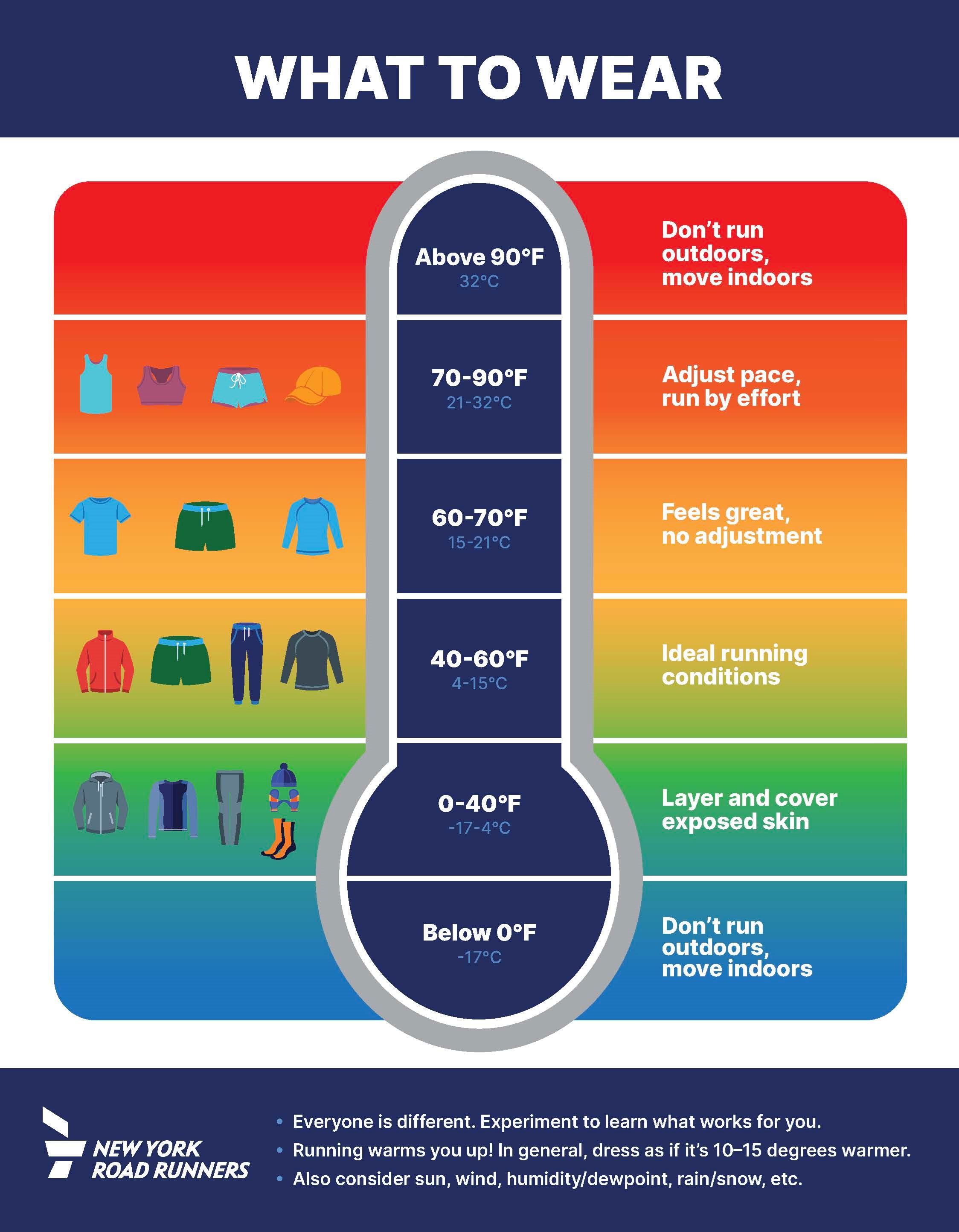
In hot and humid conditions, it’s a good idea to wear light-colored clothing to absorb the least amount of sunlight to keep you cooler. Check out the helpful chart above for some ideas on what to wear according to the weather.
Many brands make athletic apparel with built-in sun protection (typically UPF 50+) that help block UVA/UVB rays.
Fueling in the Heat
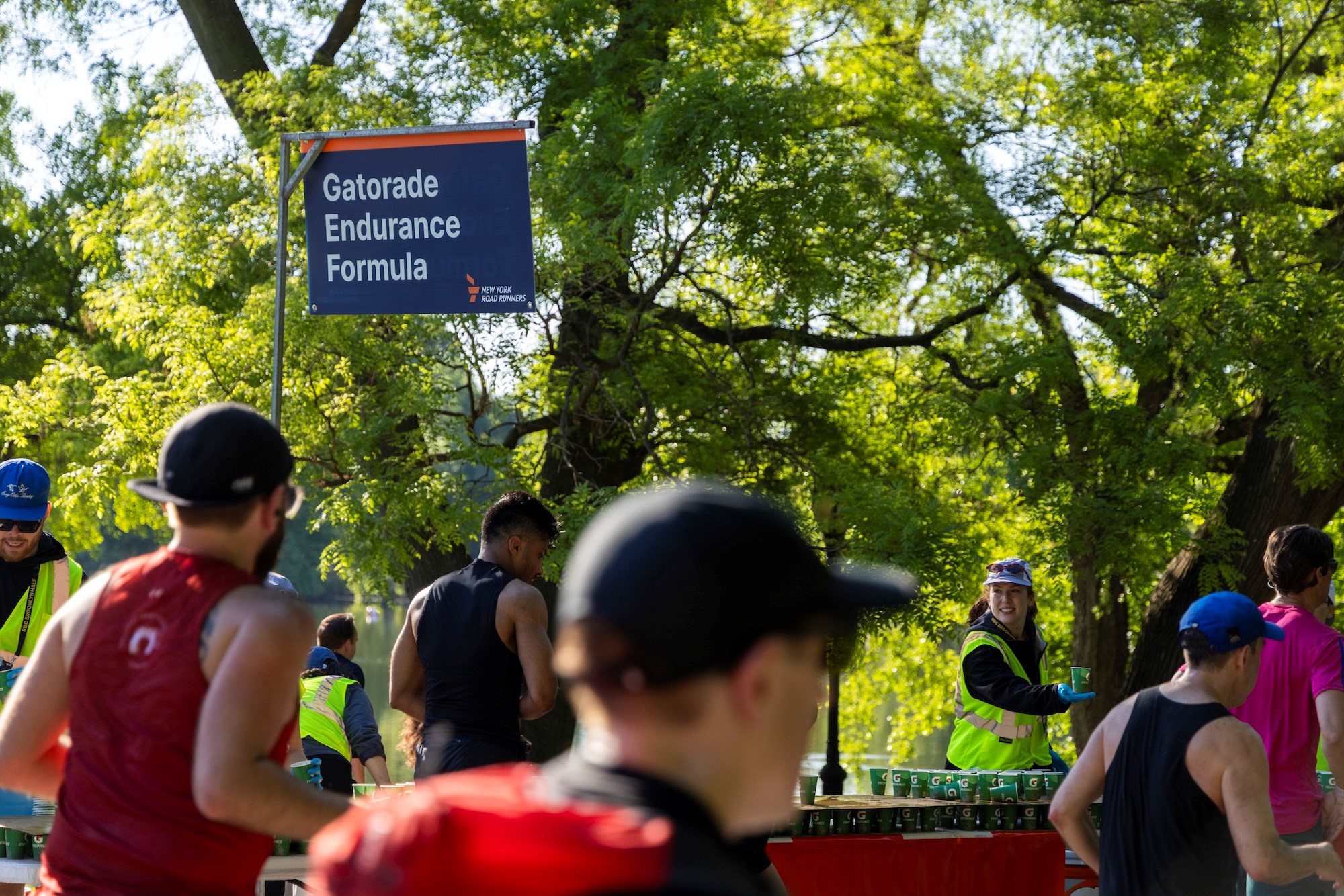
Maintaining your hydration and electrolyte balance will ensure you get the most out of your training and racing. Many people don’t adjust their hydration and electrolytes in the warmer months. Instead, they’ll wait until they feel thirsty—too little, too late on the performance side—or simply hydrate with water.
To match the demands of the conditions on your body, hydrate with electrolyte drinks, which contain salt and minerals such as potassium, phosphate, calcium, and magnesium. Your body secretes electrolytes while sweating, and a deficiency can lead to a decrease in performance, including muscle fatigue and cramping. Electrolytes can be consumed through your diet and during exercise via sport drinks or salt tablets.
Though we all sweat differently, aim to drink 18–24 ounces of water or electrolyte drink 1–2 hours before your run. During your run, carry a bottle and drink every 20–25 minutes for runs longer than 30–40 minutes. Sticking to a schedule during your runs, especially long runs, will ensure that you don’t go too far or long without hydrating. Post run, aim for another 18–24 ounces of fluids.
What's the Wet Bulb?
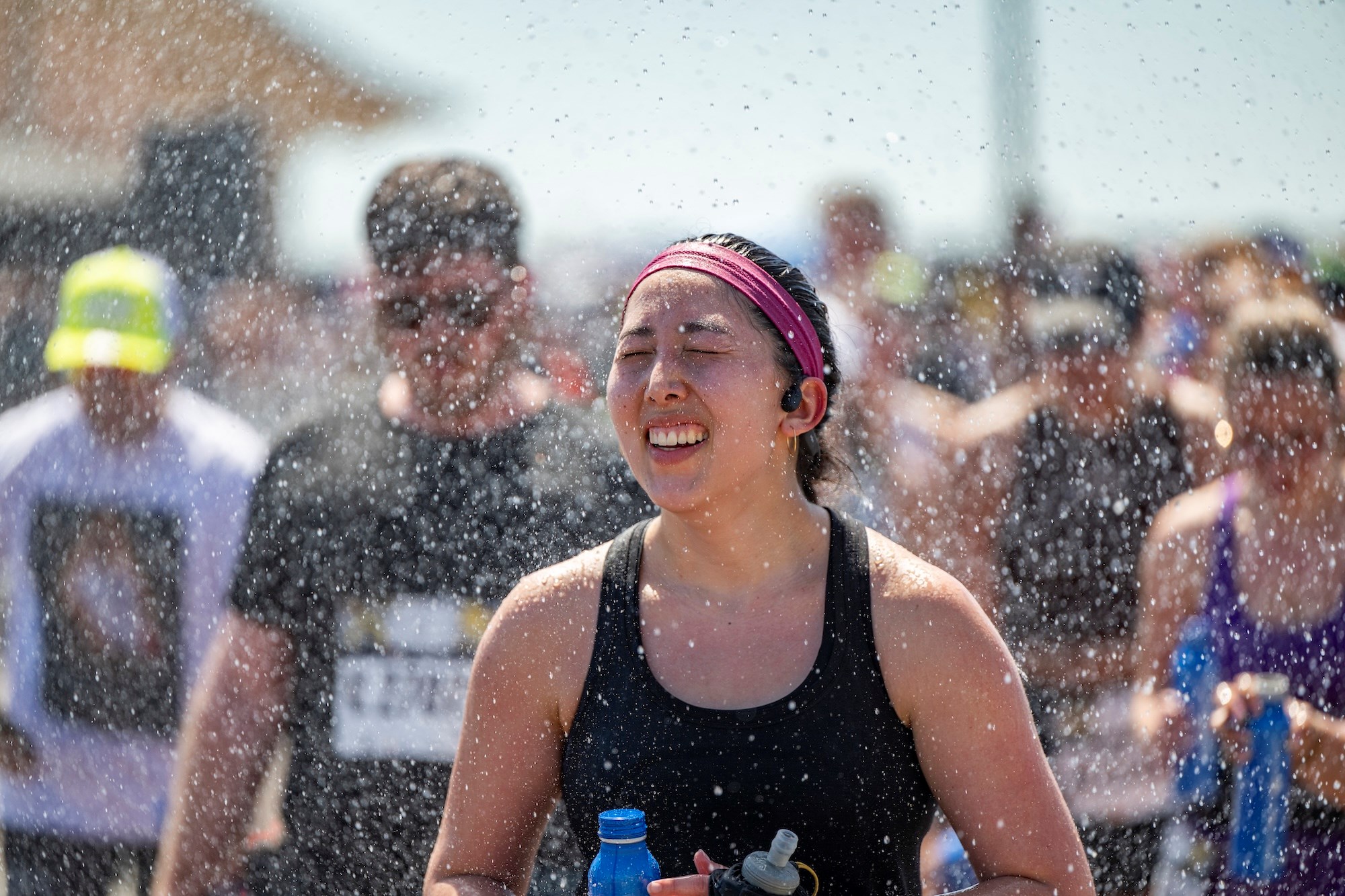
The "wet-bulb temperature" is a reference point and measurement of how well the human body can cool itself through sweat in hot and humid conditions. Wet-bulb readings of 88 degrees Fahrenheit and above are deemed too dangerous, even for healthy adults. Similarly, a temperature and humidity combo of above 90–95 degrees F with 70%+ humidity is deemed unsafe.
If the forecast calls for these conditions, it’s better to play it safe and alter your plans. If you do run outside, run on effort, not pace. “Slow” miles are still training miles. Or you can split your run so you’re not in those conditions for too long (see below).
Breaking Up Your Long Runs
Long runs are the cornerstone of training for marathons and half marathons, but they may need to be modified during warmer months. Keep in mind that ideal racing conditions tend to feature cooler temperatures (45–60 degrees F) with low humidity.
A long run in the heat can be extra challenging, especially if you’re trying to hit a few miles at goal race pace. This is why once or twice during a summer build-up, it’s okay to break up your long runs.
An example would be splitting a 12-mile long run into several miles outdoors followed by finishing up the rest of the run on a treadmill. Try to include a few race-pace miles to give you optimal conditions for those important miles. If you don’t have access to a treadmill, you could run an easy 6-8 miles in the morning and the remaining 4-6 miles in the evening at a faster pace.
We can’t control the weather, but we can control our approach, our preparation, and our outlook. Executed correctly, you can still emerge from the summer a fitter version of yourself, and reap the rewards of your training once the cooler months roll in.