
Exercise Physiologist Pamela Geisel on Recovery and Returning to Running Postpartum
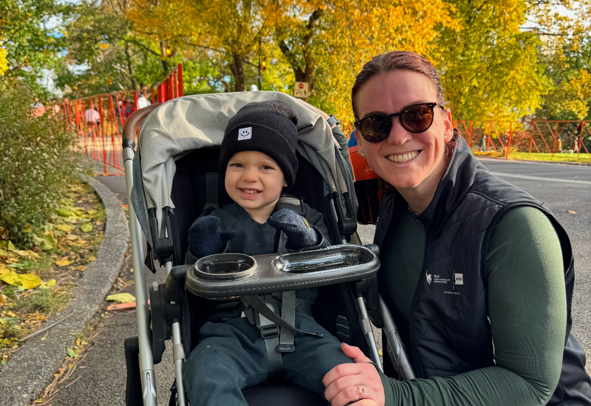
HSS exercise physiologist Pamela Geisel with her son after running the 2025 Abbott Dash to the Finish Line 5K.

Hospital for Special Surgery exercise physiologist, run coach, and NYRR Medical Advisory Council member Pamela Geisel has over 15 years of experience in the fitness field and has developed extensive expertise in personal training and rehabilitation across various settings, including corporate wellness, commercial fitness, and physical therapy clinics. A runner herself, Pamela has a particular passion for maximizing the performance of endurance athletes and empowering mothers throughout their pregnancy journeys.
Pamela was a guest on Set the Pace Presented by Peloton, the official podcast of New York Road Runners. She answered questions about training for and recovering from longer races like the United Airlines NYC Half and returning to running postpartum, drawing on her own journey back to running after giving birth in 2024.
Learn more at the Hospital for Special Surgery website.
What are the challenges that are specific to new moms who are out there trying to get back into running?
I've always worked with postpartum moms and pregnant moms, but being one myself brings a whole level of appreciation. When [my son] turned a year, that was the moment where I was like, “Okay, it's time for me to lace up and get back out there.” I was really excited.
For me, and I think for a lot of new moms, my priorities have changed so much. I've always been so driven. I'm type A, I'm a Virgo. My work has always been my identity. I put a lot of time and effort into my job, and suddenly there's this little one that needs me for survival. And he's taught me so much [about] being patient, giving myself grace. They always say as a mom you think that you're there to teach them, but he's taught me so much more than I've taught him.
So, time is definitely a big one. And just the coming back. It's like two steps forward, one steps back [because] something springs up. I have so much gratitude my body and getting back out there and doing what I love.
What are your pre-race and post-race tips for runners, whether they’re new moms or not?
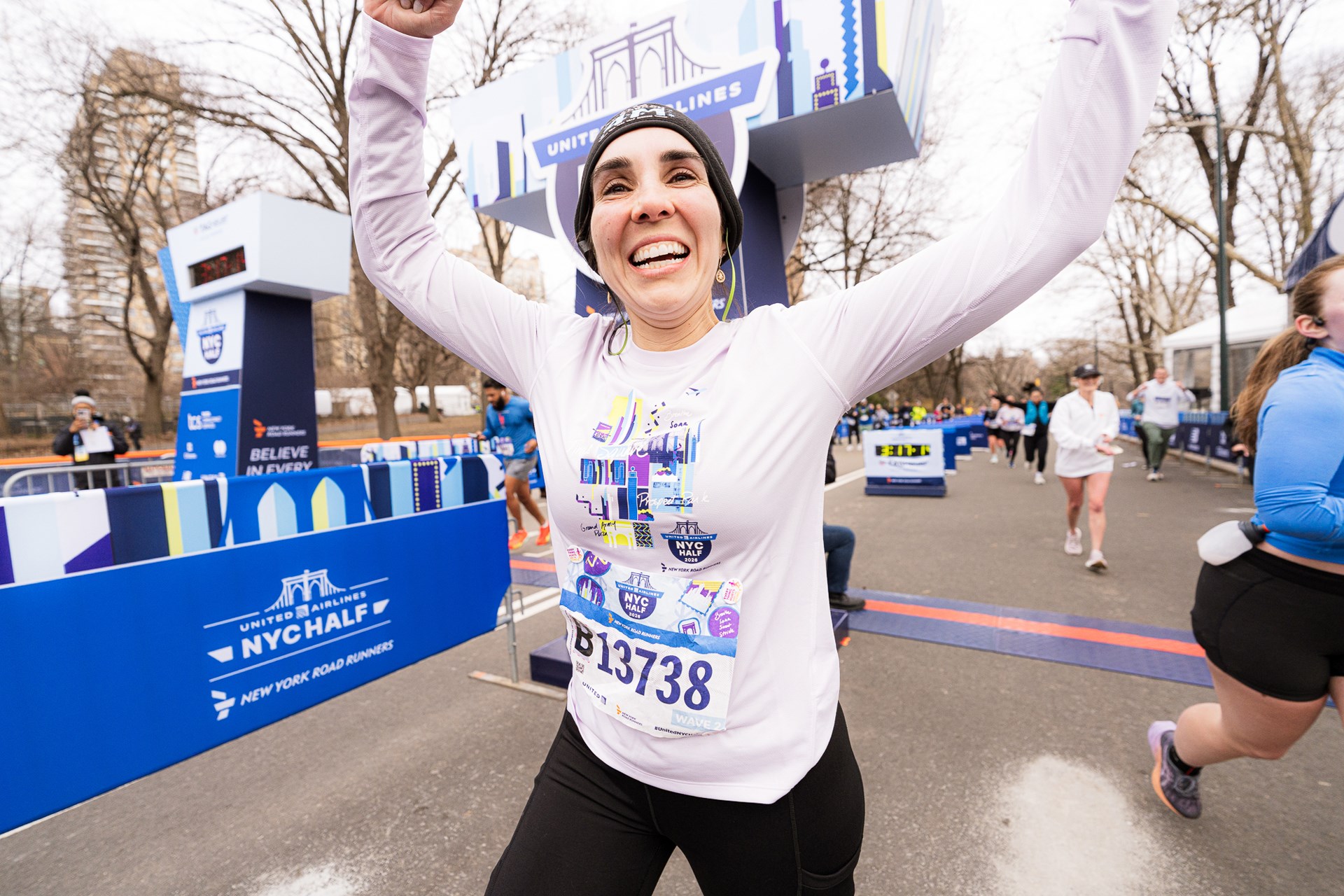
For all runners, recovery should take place throughout training, not just after crossing the finish line of a goal race, says Geisel.
When we think about recovery, we forget the basics. The recovery industry is booming, it's very profitable. You have cold plunges and infrared saunas and boots, and there's so much out there, but we forget about the basics.
You need to eat a well-balanced diet, you need to drink water, and you need to get sleep. Leading up to the race, and definitely post-race, those three things are what's going to help you recover and get back out on the road safely. [These things are] tried and true, your ABCs of recovery.
Recovery starts the moment you start training. Adhering to a smart training plan, making sure you're increasing your mileage appropriately, taking rest days, doing your strength training—all those things allow you to have a better recovery. We often think, “I crossed the finish line, now it's time to recover." Going into [race day] well-trained is going to really set you up for a nice easy recovery and get you back out there.
How long does fitness last in your body? How long can you “bank” on that last race?
This is a very important concept, and I always use this with the runners I coach. They might not have the race they planned, but they're laying the foundation. Every race you do, every training run you do, it's just laying another level. Just because you don't hit your PR, you still take benefits from that [race] into your next race.
Maybe it's a little bit of resiliency, maybe it's a little mental fortitude, maybe it's a little bit of strength, but each training cycle just layers on top of the others. Every single one matters, and you are reaping the benefits of those races you've done before. It is going to serve you. I also think you have that mental fortitude for the rest of your life.
What habits can runners incorporate into their training to keep them strong and healthy if they are going to be running a half marathon or marathon—or both?
A key to success is rest days and recovery days. We don't lose fitness as quickly as some of us think. Some of us, if we have an off week—our dog gets sick, our kid gets sick, we're on a trip—we try to make up for it the following week. And that is actually way more detrimental to our training programs than if you just adjust and take a little step back and allow life to happen. Because it’s going to happen, so appreciate that and don’t try to over-correct or make up, because it doesn't work that way.
As a strength coach, I do believe that strength training is really important, so just make sure you're squeezing that in. I know time is so limited, so maybe you just stop your run a few minutes early and do five minutes of strength training to make sure you are a resilient runner.
What about ice baths for recovery—do they do any good, or are runners just torturing themselves?
I'm not sold on cold water immersion for [recovery]. It's great if you have two really intense bouts of exercise very close together and you're trying to do anything you can to get back out there, but when you're thinking about a long training program, I don't know if the research is in their favor from a physiological aspect.
With any sort of recovery modality, when you look at the research, there are subjective improvements and then there are objective improvements. [Often] in terms of the physiological, objective outcomes, there's not a difference. But just because we might not know what those benefits are yet, it doesn't mean there's no benefit. And so much of running and life is about how we feel. So, if you enjoy a recovery modality—such as ice baths—and it's not harmful, get after it. But if you don't enjoy it, you're off the hook.
You May Also Like...
How to Recover and Take Your Next Steps After a Goal Race
Physical Therapist Debunks the Biggest Running Myths [video]
Six Things You Need to Know When Returning to Running After Giving Birth