
Start Easy, Finish Strong
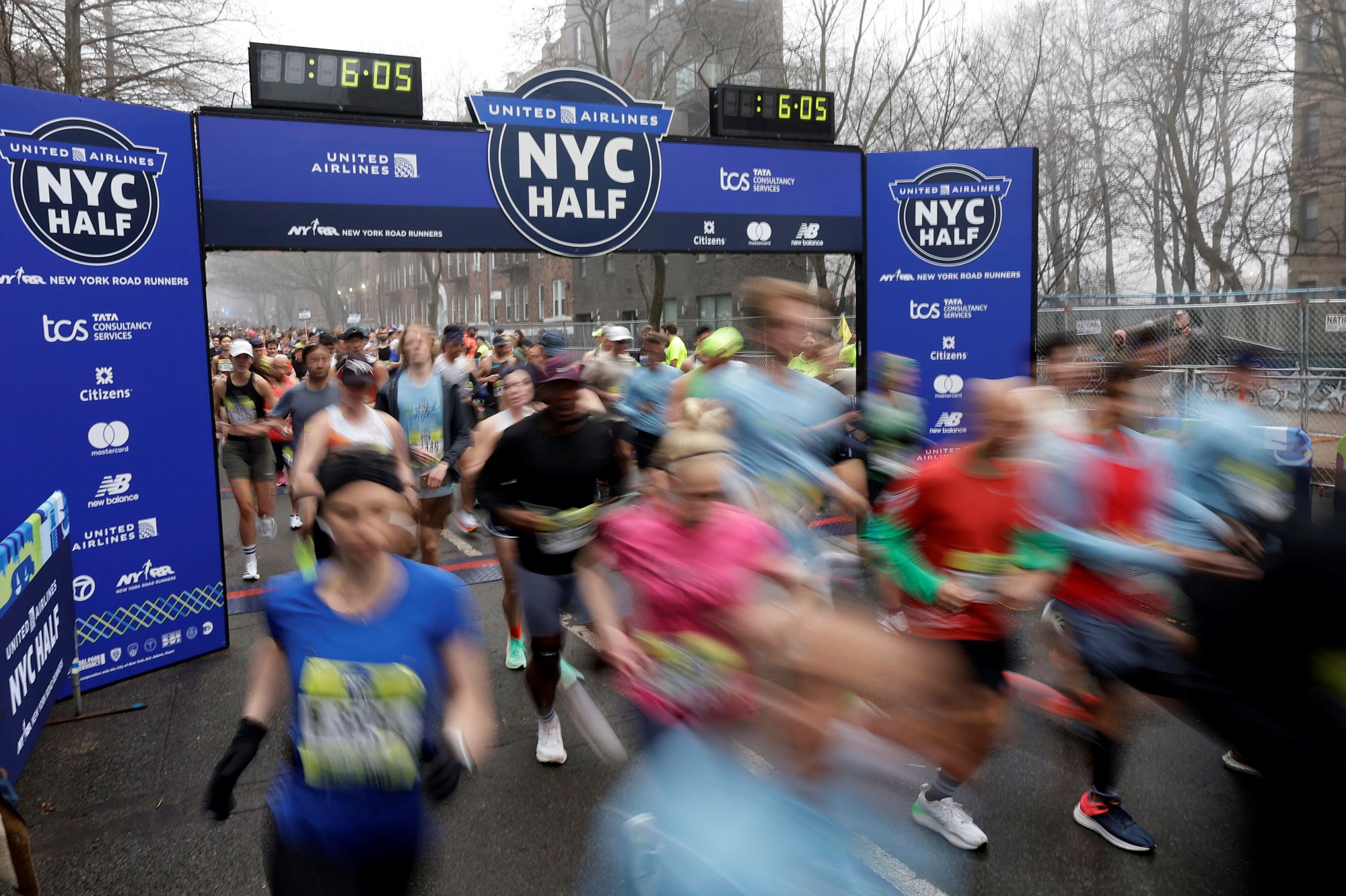
Running at an easy effort in the early miles of a race can be a winning strategy.
 This article is by Roberto Mandje, NYRR’s Senior Advisor of Engagement and Training.
A good friend recently ran the United Airlines NYC Half after a 10-year hiatus from racing. She started slower than she might have liked because she didn’t want to bob and weave through other runners in the first mile. The course opened as she entered Prospect Park, and she found herself running with the NYRR Pace Team. She settled in with them, feeling relaxed.
Miles later, somewhere along the FDR, she passed the pacer and went on to negative split (run the second half of the race faster than the first half) and set a personal best. Her first mile was her slowest, her last was the fastest!
They say, “Life is a marathon, not a sprint.” This is good advice for race day, regardless of the distance. The early miles, especially in distances of 5K and longer, do not necessarily predict the race's overall success or failure.
If you have ever participated in a race, or spectated near the start, you’ve likely seen folks flying off the line like Usain Bolt. While the urge to start fast is understandable, there are benefits to starting your race at a measured pace, like my friend did, and picking up the pace in the later stages.
You’ll Warm Up Properly
A slow start allows your body time to warm up and ease into the race. This may be especially helpful in large races, where you may have to stand for a while in the start corrals after your warmup.
Practice this approach during your training runs to become familiar with the feeling of starting out slower and easing into your goal pace. You can work on it during an easy run, tempo run, or even long run. Eventually, you’ll gain the confidence and peace of mind to employ the tactic on race day even when surrounded by crowds.
You’ll Stay Calm
Pre-race nerves, jitters, and anxiety are common and normal, regardless of your ability or experience level. They’re amplified when one adds the pressure of chasing a time and feeling the need to be on goal race pace (or faster) immediately. By allowing yourself to start slower than goal race pace, you allow the race, at least in the early miles, to come to you. That shift can help you start more relaxed, which will likely lead to a faster finish time and better race experience.
You’ll Save Energy
If you attempt to go out fast in a larger race, you’ll likely find yourself bobbing and weaving through runners in the early minutes. This will add unnecessary distance to your run and burn up energy as you speed up and slow down. It can also potentially cause danger as you bump and push into other runners.
You’ll Negative Split
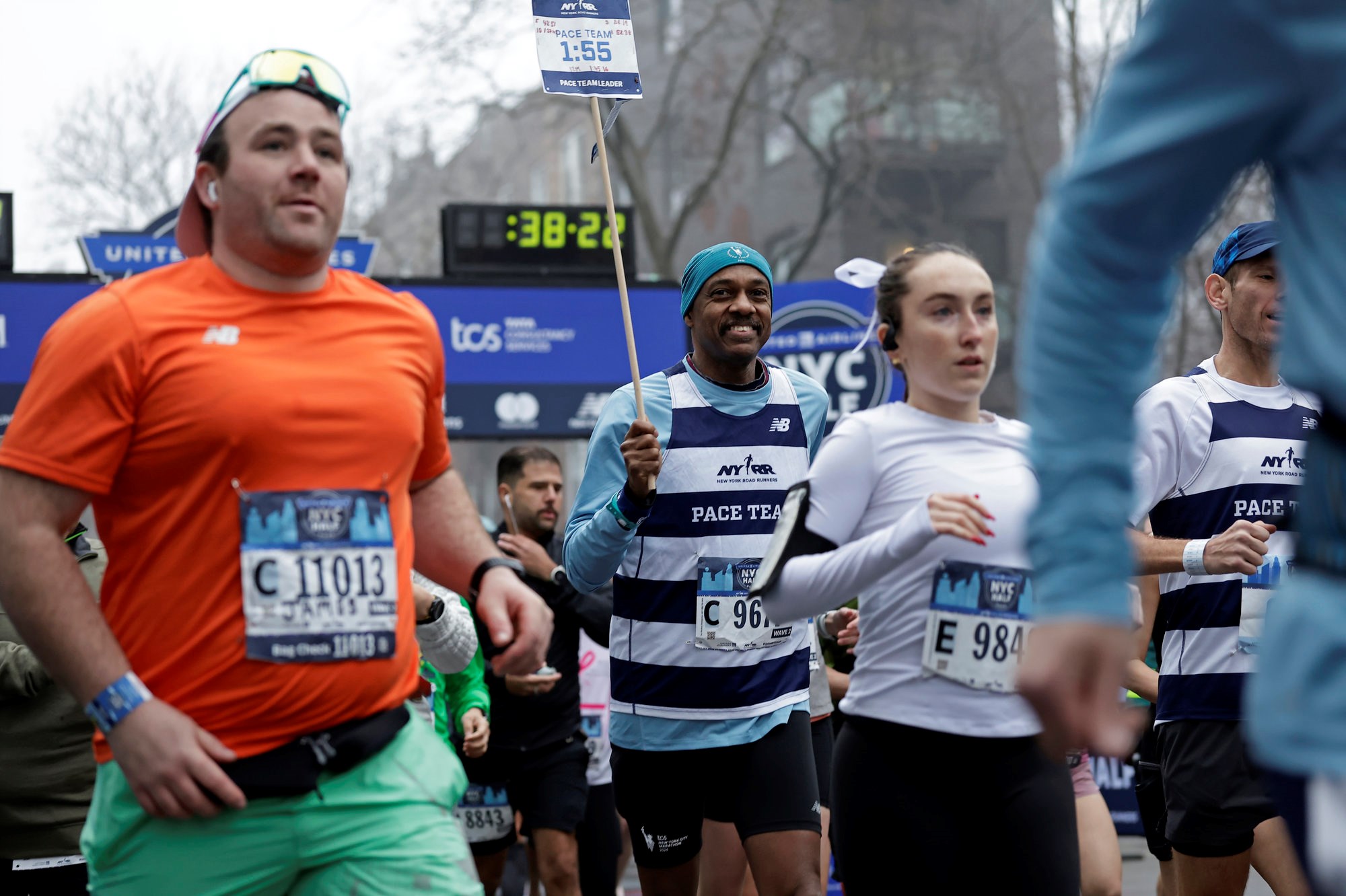
Sticking with an NYRR Pace Team leader can help ensure you don't go out too fast.
This is done when you run the second half of your race faster than the first. Physiologically speaking, it’s the most efficient way to run because you conserve energy early on. Psychologically, you’ll get a boost from passing runners in the later miles rather than them passing you.
Know Your Margin of Error
Keeping the above points in mind, one must take race distance and type/terrain of the course into consideration. Here’s why:
Distance: The shorter the race, the smaller your margin of error. In a marathon or half marathon, you have more time to ease into your goal pace than you do in a shorter race such as a 5K. So, while it’s still important to ease into shorter races and distances, the overall execution and margin of error is going to be quicker/shorter than a longer race. Check out this blog post on how to run a road mile such as the New Balance 5th Avenue Mile.
Type/Terrain: Cross country, track, and road races all present different challenges and opportunities. Typically, cross country races have a wide start that narrows to trails and paths, so cross country runners may need to start fast to avoid being pinched if there’s a bottleneck and getting stuck in the back of the pack. This blog post offers more tips for cross country training and racing. Similarly, on a track, runners typically vie for the first two lanes, as nobody wants to run extra distance. So, you’ll sometimes see runners start fast for the first 100 to 200 meters before settling into a more manageable pace.
Good Luck in Your Next Race!

Hold back early, and you'll approach your next finish line feeling strong and fast.
Inspired by her success at the United Airlines NYC Half, my friend has set her sights on another personal best at the RBC Brooklyn Half in May, knowing that a slow first mile likely will spell overall success. You, too, can plan to start your next race at a moderate pace and finish strong—maybe even run a personal best. Give it a try, and happy running!