
How to Train in the Rain

 This article is by Gemma Ward, NYRR’s Lead for Runner Training and Products.
There’s something undeniably epic about running through New York City in the rain: the puddles, the shine of wet pavement, the feeling that you’re the only person (or training group) out there getting it done. It’s kind of electric.
But as a coach here in NYC, I'm asked all the time: “Should I still run if it’s raining?”
My answer? It depends. Yes, running in the rain can be empowering. It’s a mental toughness booster. Running in the rain teaches you to let go of perfect conditions—and let’s face it, race day isn’t going to wait for blue skies.
But not every rainy run is a good idea. There is a difference between tough and reckless, and knowing when to stay indoors is part of training smart. Here's how to make the call, and enjoy running in the rain when it's safe to do so.
Safety First, Always
If there’s a thunderstorm, lightning, flood warnings, or heavy wind, your run can wait, or you can move it inside. I don’t care how committed you are, no training plan is worth dodging falling branches or becoming a human lightning rod in Astoria Park. Lightning seeks tall, isolated objects. If you hear thunder, that means lightning is close. Find cover and wait it out.
Flooded roads and trails are another danger, as they can hide potholes or debris—a twisted ankle waiting to happen. Retreat to safety as quickly as possible. The same goes for high winds, which reduce visibility and turn tree-lined routes into obstacle courses.
When I say skip the run, I don’t mean skip the work—you can move it to a treadmill, cross-train, or shift it to another day. Your safety is always non-negotiable. New York Road Runners cancels trainings and races in hazardous conditions
If It’s Just Rain?
Now, if we’re talking about steady, manageable rain? That’s a different story. Rain like that can make for a great training day, less-crowded streets and paths, cooler temperatures, a break in humidity, and the kind of mental challenge that can pay off on race day. If you're prepared, you can have a safe, successful and fun wet run.
Dress for the Conditions
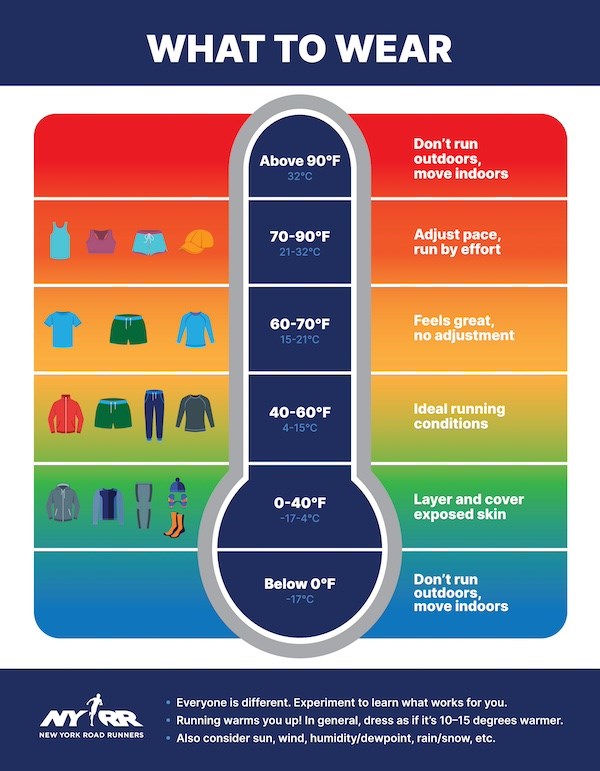
For rainy runs, opt for synthetic or wool base layers that wick moisture and help regulate your temperature. Over that, a lightweight, breathable, water-resistant shell will help keep your core dry—just make sure it’s ventilated, so moisture from sweating can escape. See the chart above for more guidance.
A hat or visor will keep water off your face and help you stay focused. Wear bright colors, reflective gear, and lights at dusk or after dark. New York drivers and cyclists have enough distractions; don’t make yourself harder to see.
Apply petroleum jelly or your chosen anti-chafe balm anywhere your gear and shoes might rub. Blisters and chafing are never fun.
Rainy runs are not the time to wear your favorite race shoes. The rain shortens the life of your shoes and in the rain, you are going to need a little more tread. Wear shoes with a solid grip and make sure to avoid the painted lines and slick areas in the park.
For socks, I choose synthetic or merino wool on rainy days. Thin cotton socks offer zero protection once soaked.
Reroute with Intention
What's NYC without potholes and surprise construction zones? Be alert for these potential hazards on your rainy runs. During or after a downpour, I encourage athletes to avoid low-lying areas that flood easily, like the West Side Highway or parts of Central Park bridle path.
Stick to routes with good drainage and good visibility. Consider looping close to home or a gym in case the weather turns quickly—it may be boring, but it's safe.
Cold Rain?
Once temps dip below about 50°F (10°C), your body loses heat fast when wet. Even if you feel warm at the start, over time you can risk hypothermia.
Dress in layers as noted above, and bring dry clothes for after your run or plan to finish at home. I’ve met too many runners who regretted the subway ride home in soaked gear. Find more tips here.
If you’re shivering or dizzy, or your hands go numb, that’s a very clear cue to stop and seek shelter. Don’t wait until you’re in trouble—there is always tomorrow.
Why I Love Rainy Runs (And You Might, Too)
Here’s the thing: Running in the rain builds something more than fitness—it builds grit. You learn how to adjust, to embrace discomfort, and to stop waiting for “perfect” running weather. In this city, where our races can throw any sort of weather at us, we want to get out there and practice, as long as it's safe to do so. Some of the strongest athletes I know are the ones who've logged many wet miles. They show up ready for anything, because they’ve already trained through it.
Running in the rain can be empowering and even fun, if you do it safely. Know the difference between a good challenge and a bad risk. Gear up, plan smart, and don’t hesitate to change plans if conditions turn.