
How to Get Started Running

Updated April 2025.
If you’re new to running, or returning after taking time off, you probably have lots of questions: What to wear? How far to run? How fast? How often? What to eat and drink? And so on. Let's get you some answers!
What should I wear?
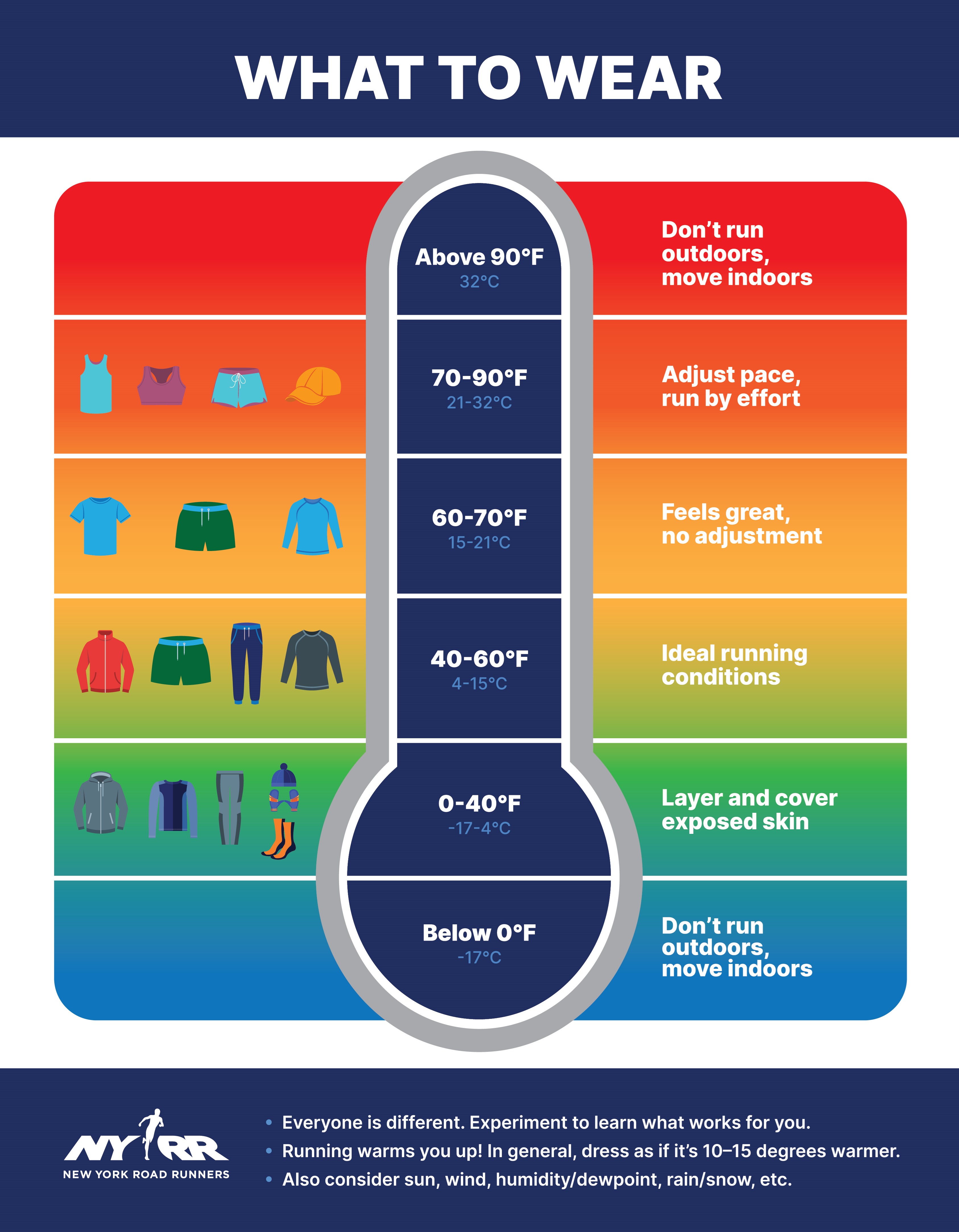
Follow the “10 degrees” rule: Dress as though it’s 10 degrees (Fahrenheit) warmer than what the thermometer says. So, if it's 30 degrees, dress for 40 degrees. Running warms you up! As you get fitter and run farther and faster, you’ll be able to dress as if it’s even warmer. Cover your head and hands on cold days.
On warm days, wear light-colored clothing to reflect the sun. A hat with a brim will shield your face. Light layers can be removed and tied around your waist.
The chart below is a useful guide.
Your running shoes should have fewer than 300–500 miles of wear. Don’t run in tennis, gardening, or casual sports shoes—they lack the support you need to repeatedly land on a hard surface. Visit newbalance.com for the latest New Balance shoes and apparel.
How far should I run?
Think minutes, not miles, and aim for 20–30 minutes of continuous activity for your first few workouts. Unless you’re fit from another aerobic sport, start by alternating 2 minutes of brisk walking and 2 minutes of easy running for those 20–30 minutes. What’s “easy”? You should be able to speak in full sentences. If you feel breathless, slow your pace.
Should I run every day?
No. Very few runners do, even the most competitive. Start with every other day (even if you're walk-running), so your body has 48 hours to recover between efforts. You can do something else on the alternate days if you wish, such as cycling, swimming, or a strength session, but take at least one day a week completely off.
Should I eat before I run?
Most people find they have more energy and better focus for running when they’ve had a snack or small meal about an hour before. Try something light, easy to digest, and familiar—toast, a piece of fruit, some raisins or nuts. Try different things to learn what works best for you.
Have a few sips of water or other non-alcoholic beverage before you head out, even if you’re not particularly thirsty, to top off your hydration stores, and have more fluids after your run.
What if something hurts?
Most new runners feel some mild muscle soreness, most commonly in the front (quads) and back (hamstrings) of the thighs, and/or in the calves. This soreness is normal and will usually go away a day or two after each run. It will also lessen over time as your muscles adjust to running. If something hurts enough to cause limping, take a couple of days off, gently stretch and massage the area, elevate it, and apply ice (wrapped in a towel, or an ice pack) for 10 minutes, several times a day.
If you're still in pain after a week of self-treatment, it's a good idea to seek medical attention. Hospital for Special Surgery offers diagnosis and treatment for a wide variety of running injuries.
How can I meet other runners?
Find ways to connect with other runners at the links below.
Join New York Road Runners if you're not already a member.
Check out NYRR Open Run, free weekly community runs and walks in parks across NYC and in Jersey City.
Find a running club (social and competitive) wherever you are in the Tri-State area.
Sign up for in-person NYRR Group Training or join the virtual NYRR x Runna training community.
Visit the NYRR RUNCENTER featuring the New Balance Run Hub, home to our inclusive running community based in NYC.
View our year-round calendar of races. If registration is full, come out to cheer, then socialize afterward!